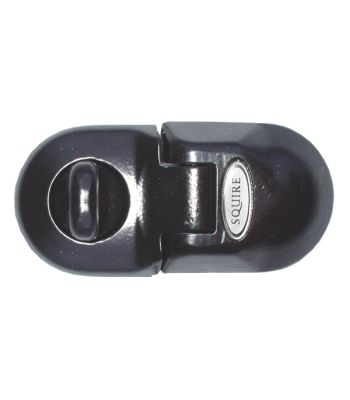
Padlock Padbars
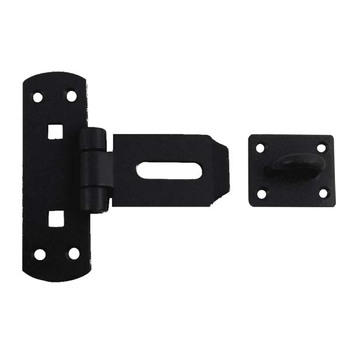
Padlock Bars
The conversation about padlock security usually starts and ends with the padlock itself — which misses half the picture. What holds the padlock staple in place is where the real vulnerability sits on most doors, gates, and shutters. A standard hasp fixed with wood screws into a door frame will pull away under load. A padbar, by contrast, is built to take that attack and redistribute it in a way a conventional hasp simply can't.
The difference is in the design. Where a hasp and staple presents a hinge point and visible fixings, a padbar wraps a hardened steel cover plate over the fixing bolts once closed — so the screws or bolts holding it to the door are physically inaccessible when the lock is engaged. There's nothing to lever, nothing to attack with a drill, and no way to work a crowbar into the gap between the cover and the frame. That's why padbars are the preferred choice for shed doors, garage side doors, outbuilding access points, and anywhere that a conventional hasp installation has already been compromised or feels inadequate.
Squire's Stronghold padbars — the STH1 and STH2 — are the benchmark at the heavier end of this category. They're engineered to pair with high security closed-shackle padlocks, and that combination is genuinely difficult to defeat by force. If you're specifying padlock security for a commercial outbuilding, a storage unit, or a rear access door that's out of direct sightlines, this is the kind of fitting that actually matches the threat level rather than just looking the part.
The Asec vertical padbar addresses a specific installation need — some door configurations, particularly narrow frames or doors hung close to a wall, don't suit a horizontal fitting. Getting the orientation right isn't cosmetic; it affects how squarely the padlock sits and how cleanly the shackle engages, both of which matter under repeated use.
Fitting matters as much as the product itself. Coach bolts through the door, tightened from the inside with the nut recessed or welded, is the installation standard that makes a padbar do what it's supposed to do. Anything less and the fitting becomes the weak point, regardless of what's on the door.