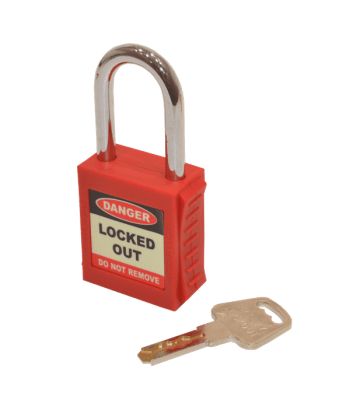
Lockout Tagout LOTO Safety Padlocks
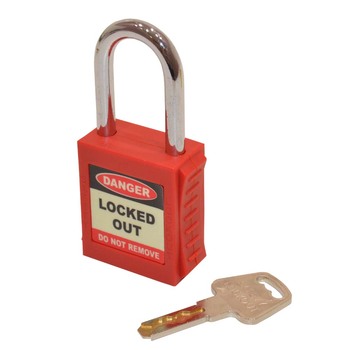
LOTO isn't a padlock category in the usual sense. The shackle isn't there to stop theft — it's there to stop a machine starting up while someone's hand is inside it. That changes everything about how you choose and use this equipment.
The core principle is simple: before any maintenance or repair work on plant and equipment, every energy source gets physically isolated and locked out. The person doing the work holds the only key. No one else can restore power, pressure, or flow until that padlock comes off. Under the Electricity at Work Regulations 1989 and PUWER, this isn't optional — a properly managed lockout tagout procedure is a legal requirement where equipment poses a risk during maintenance.
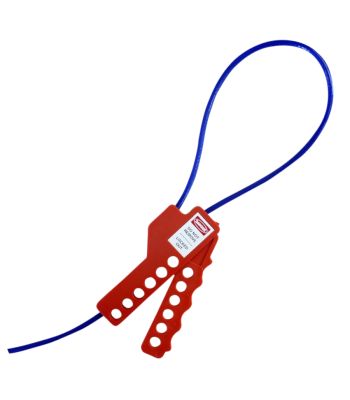
What gets messy in practice is multi-trade jobs. An electrician isolates a panel, but a mechanical engineer is also working on the same machine. That's where multi-lock safety hasps come in — each worker clips their own padlock onto the hasp, and the equipment stays isolated until every single lock is removed. A non-conductive six-hole hasp can carry up to six individual locks, so no one is depending on anyone else's word that the job is done.
The colour coding matters too. Most sites assign a colour per department or trade, so there's no ambiguity at the point of isolation. Asec's LOTO safety padlocks are available in multiple colours for exactly that reason — combined with keyed-to-differ keyways, each padlock operates on a unique key that no colleague can replicate. The tags that accompany them carry the message clearly: "Do Not Operate" or "This Equipment Has Been Locked Out," which satisfies the documentation side of a permit-to-work system.
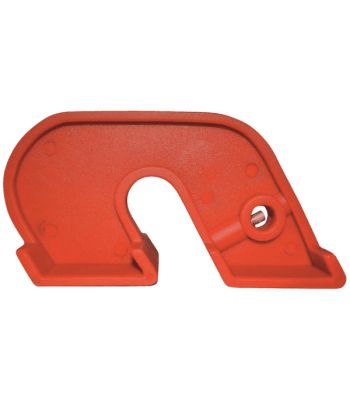
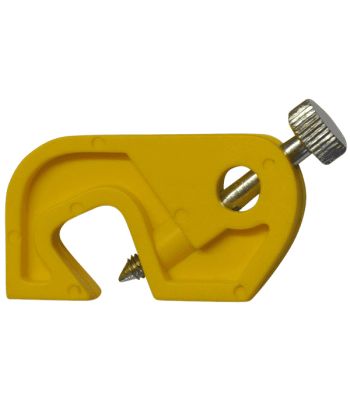
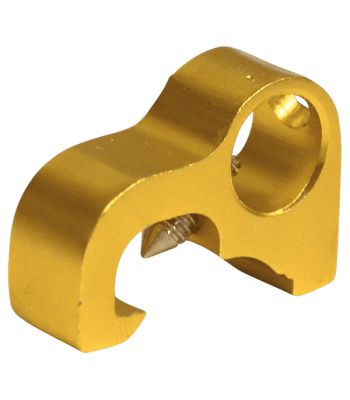
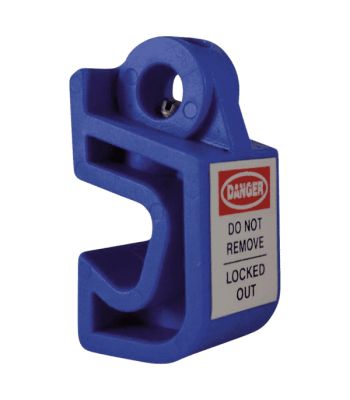
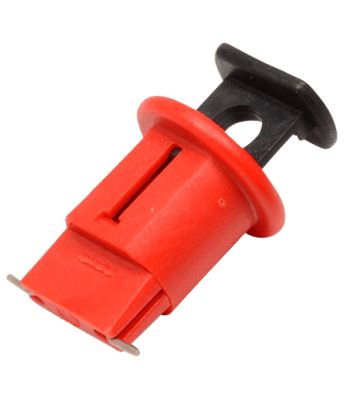
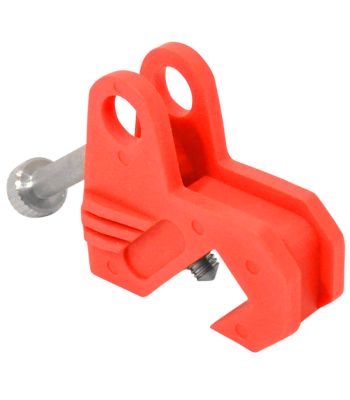
Beyond the padlocks themselves, a complete isolation procedure often needs more than a shackle and a hasp. MCB circuit breaker lockout devices fit directly over miniature circuit breakers in a distribution board, stopping anyone from flicking a breaker back on while a circuit is live. The universal circuit breaker adapters cover a broader range of breaker profiles where you can't predict what panel you'll be working on. For pneumatic systems, the pneumatic safety lockout hasp works on ball valve and pipe isolation points. And if you're running a site-wide LOTO programme rather than just kitting out one engineer, the Asec LOTO storage cabinet gives you a central station where every device and padlock lives when it's not in use — keeping the programme visible and auditable.
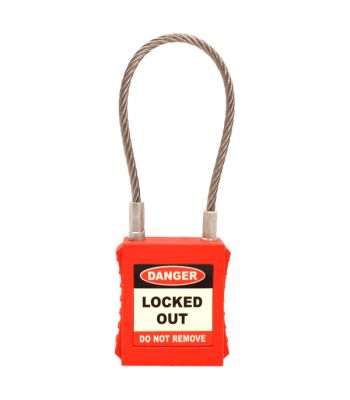
The wire cable variants of the LOTO padlocks are worth knowing about for awkward isolation points where a standard shackle won't reach or won't fit the geometry of the isolation point. The long-shackle version serves a similar purpose where there's more clearance needed through a hasp or valve handle.
If you're buying for a maintenance team for the first time, the practical starting point is usually: a padlock per person (in their colour), a couple of multi-hole hasps, the right circuit breaker lockout device for your panels, and a pack of tags. From there, you build outward depending on what equipment you're maintaining and what energy sources are involved.